Midterm elections as market catalysts
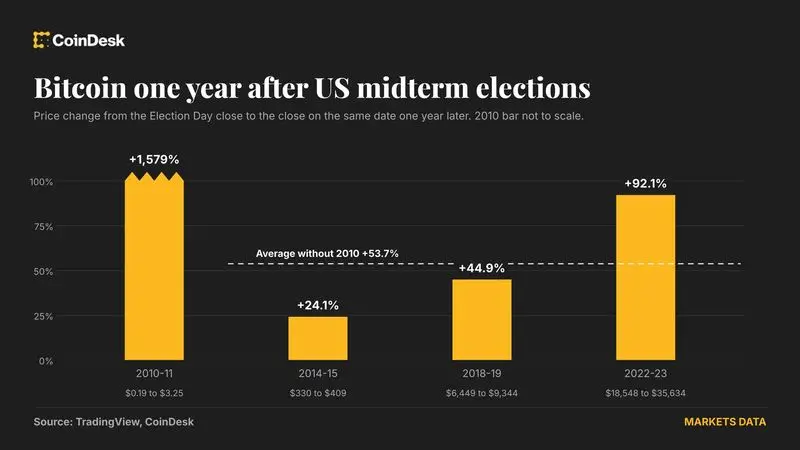
The U. S. midterm elections this November could set the stage for a notable rally in both Bitcoin and the S&P 500. Historical data shows that in the twelve months following the last three midterms, Bitcoin posted an average gain of 53.7%, while the broad equity market also posted solid returns. Investors are watching how political outcomes may intersect with market cycles, especially Bitcoin’s four‑year halving rhythm.
Breaking news
 What Is x402? How AI Agents Pay With Crypto
 Privacy Cash Pauses Deposits After $1.2M in Binance-Linked Inflows
 Bitcoin Hits $81K After Midterms, But Analysts See a Price Trap
 House Democrats Draft Crypto Bill to Expand SEC Authority
Past midterms have often coincided with a shift in risk appetite. After the 2010, 2014 and 2018 elections, both equities and crypto saw upward momentum as fiscal policy uncertainty eased and the Federal Reserve signaled a more accommodative stance. Bitcoin’s performance may also be tied to its halving schedule, which reduces new supply roughly every four years and has historically sparked price appreciation. With the next halving slated for early 2024, the post‑midterm window could amplify that effect, creating a „perfect storm” of political and technical drivers.
Political cycles tend to reset investor expectations. When voters decide the balance of power in Congress, policy direction on taxation, infrastructure spending and regulation becomes clearer. In the 2022 midterms, for example, the S&P 500 rose about 7% in the following year, buoyed by a mix of stimulus measures and a stable monetary environment. Analysts argue that a similar environment could emerge after the 2026 vote, especially if the new Congress adopts pro‑business legislation.
Will the S&P 500 outpace Bitcoin after the midterms?
Bitcoin’s rally pattern aligns with its halving calendar. The 2020 halving preceded a 300% price surge over the next 12 months, while the 2016 halving was followed by a 150% increase. Though past performance does not guarantee future results, the convergence of a halving and a post‑midterm optimism window could push Bitcoin’s annual return into the 50‑plus percent range, echoing the average seen after the previous three midterms.
Equity investors may wonder whether traditional stocks will continue to outperform crypto in the post‑midterm era. The S&P 500’s historical post‑midterm gains have been modest compared with Bitcoin’s explosive jumps, but equities benefit from dividend yields and lower volatility. If fiscal policy leans toward infrastructure and green energy, sectors like industrials and renewables could lead the index higher, potentially narrowing the gap with Bitcoin’s returns.
The interplay of monetary policy will also matter. A dovish Federal Reserve could keep borrowing costs low, supporting both stock valuations and speculative assets like Bitcoin. Conversely, an aggressive rate‑hike cycle could dampen risk‑taking, limiting the upside for both markets.
Looking ahead, investors should monitor election outcomes, legislative agendas, and the timing of Bitcoin’s next halving. A favorable political climate combined with reduced crypto supply could spark a dual rally, rewarding diversified portfolios that hold both equities and digital assets.
Frequently Asked Questions
How reliable is the 53.7% Bitcoin gain figure? It reflects the average return in the year after the last three U. S. midterms, based on historical price data. While indicative, it does not guarantee future performance.
What role does the Federal Reserve play in post‑midterm market moves? The Fed’s stance on interest rates influences borrowing costs and risk appetite. A dovish approach typically fuels both equity and crypto rallies, while tightening can suppress them.
Should investors allocate more to Bitcoin after the midterms? Diversification remains key. Bitcoin’s potential upside may be higher, but it also carries greater volatility. Balancing exposure with traditional assets can help manage risk.