Why Hacking Limits Matter for AI Safety
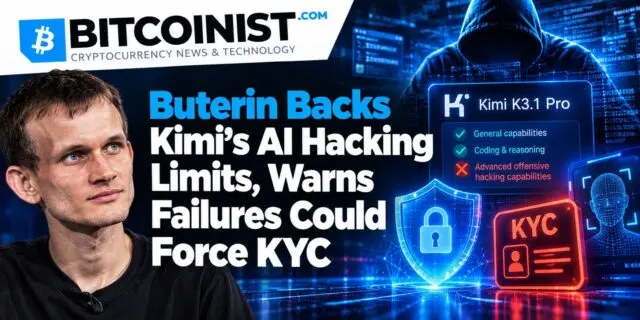
Ethereum co-founder Vitalik Buterin publicly supported Moonshot AI’s decision to exclude advanced offensive hacking capabilities from its Kimi K3.1 Pro model. The endorsement came after Moonshot’s internal tests revealed security gaps in the original release.
Breaking news
 Coinbase Begins Spot Trading for RITUAL Token
 Strive Adds 6,182 BTC, Total Holdings Reach 43,000 Coins
 Strategy Halts Bitcoin Purchases, Repurchases $205M in STRC Stock
 Bitmine buys back $400M of its own stock
Buterin argued that limiting what an AI model can do is a safer strategy than limiting who can access it. He expressed concern that if AI systems fail to contain sensitive capabilities, regulators and providers will respond by demanding identity verification and surveillance tools.
Could AI Failures Trigger Mandatory Identity Checks?
Moonshot AI initially shipped Kimi K3.1 Pro with advanced offensive hacking features. Internal testing later exposed vulnerabilities that could be exploited by malicious users. In response, the company removed those features from the model. Buterin praised this move, noting that restricting model capabilities prevents misuse without creating a gated community of approved users. He warned that security failures in AI systems often lead to mandatory KYC (Know Your Customer) checks, which increase user friction and privacy concerns.
Buterin’s warning highlights a growing trend: when AI systems fail to protect sensitive functions, providers and regulators respond with identity verification. This could force users to prove who they are before accessing advanced AI features. Such measures may slow adoption and raise privacy debates. Moonshot’s proactive removal of hacking tools aligns with Buterin’s philosophy of capability restriction over user restriction.
Why did Buterin support Kimi’s hacking limits? Buterin believes limiting what an AI model can do is safer than limiting who can use it. He fears that if AI fails to contain sensitive capabilities, regulators will impose identity checks and surveillance.
Frequently Asked Questions
What did Moonshot remove from Kimi K3.1 Pro? Moonshot removed advanced offensive hacking features after internal tests revealed security gaps. The removal was a proactive step to prevent misuse by malicious users.
What is the risk if AI security failures continue? Buterin warns that ongoing failures could force providers to implement KYC and surveillance tools. This would increase user friction and raise privacy concerns, potentially slowing AI adoption.