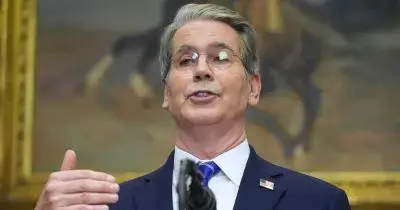
Dollar Policy Enters New Phase
The United States Treasury has initiated a significant currency intervention. This marks the first such move in over ten years. Treasury Secretary Scott Bessent confirmed a joint effort with Japan. They are actively buying yen to influence global markets.
Breaking news
 Bitcoin Drops Below $82,000 After Hot US Inflation Data
 Kraken Parent Payward Acquires Saldo Bank for European Expansion
 UK Trader Sues BitMEX Over 1,053 Losing Trades in £20 Million Claim
 EU Banking Regulator Seizes Direct Control of USDC Oversight
This action signals a new era for US dollar policy. It demonstrates a direct approach to currency activism. Washington has largely avoided this type of intervention for a long time. The plan involves deploying billions of dollars.
The US Treasury's commitment is substantial. Estimates suggest $5-10 billion will be used. This money will directly support the yen. Such a large-scale operation reshapes market expectations. It shows a willingness to influence exchange rates.
What Are the Potential Market Repercussions?
This coordinated effort with Japan is key. It highlights international cooperation on economic stability. The goal is to manage currency valuations. This can impact trade balances and investment flows.
This intervention could significantly weaken the dollar. A weaker dollar makes US exports more competitive. It also impacts the value of dollar-denominated assets. This shift might influence various financial instruments.
Some analysts believe a weaker dollar could boost alternative assets. Bitcoin, for instance, might see increased interest. Gold could also become more attractive. These assets are often seen as hedges against currency fluctuations.
Frequently Asked Questions
What is the purpose of this currency intervention? The intervention aims to strengthen the Japanese yen. It also seeks to manage the value of the US dollar. This is done to achieve economic stability and support trade.
How does this affect the US dollar? The direct purchase of yen by the US Treasury will likely weaken the dollar. This makes US goods cheaper for foreign buyers. It also affects the purchasing power of the dollar abroad.
Could this lead to more currency interventions? This action sets a precedent for future interventions. It suggests the US is prepared to use direct action. This could happen if currency imbalances become too disruptive.