Federal Safeguards for Digital Currency Reserves
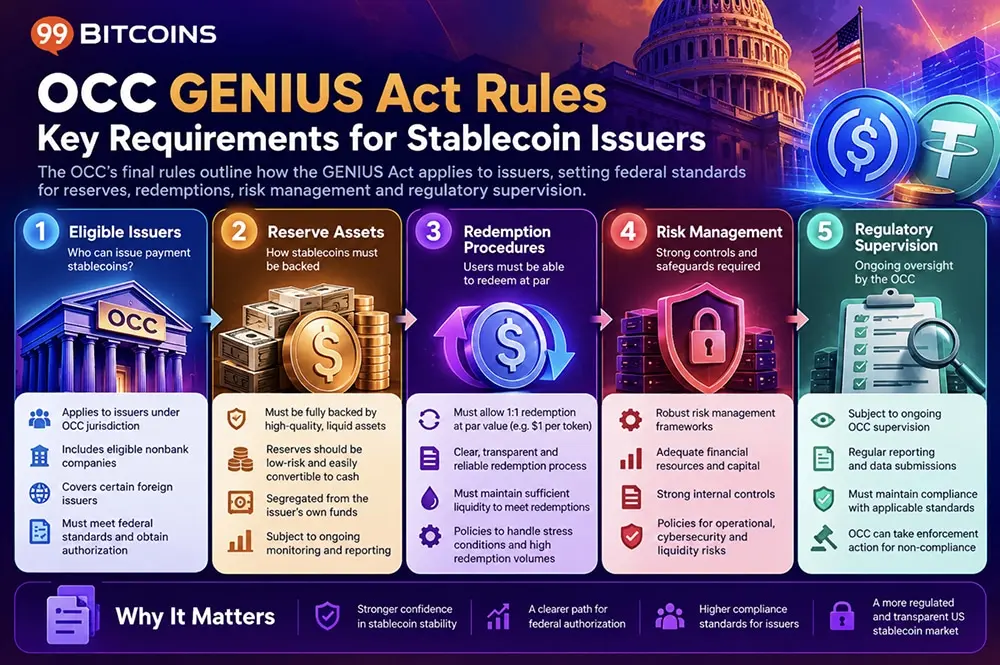
American monetary authorities published final regulations under the GENIUS Act to govern stablecoin issuers nationwide, creating mandatory federal standards for reserves, redemptions, and risk controls starting January 18, 2027.
Breaking news
 Injective Seeks SEC Approval for Onchain Trading of Tokenized Stocks
 Bitcoin Hits $61,000 as Short Sellers Face $117 Million in Liquidations
 Bitcoin’s Dormant Supply Hits 68.5% as Price Stalls Near $60,000
 Bitcoin ETFs Bleed $3.05B in Seven Days as November Outflows Hit $5.39B
The Office of the Comptroller of the Currency established these federal guidelines to bring order and predictability to the growing digital payment sector. Companies now face rigorous compliance demands regarding how they back their digital tokens with traditional assets.
Issuers must maintain fully backed reserves matching the total value of circulating stablecoins at all times. The framework demands high transparency and immediate liquidity to protect consumers during market stress.
How Will the New Framework Affect Market Participants?
Companies offering these payment products must submit regular risk management assessments to federal regulators. These protocols aim to prevent the destabilization of traditional financial systems by ensuring digital tokens can meet sudden redemption demands.
Industry participants gain a definitive regulatory environment that removes years of legal ambiguity across different states. This clarity could attract traditional banking institutions into the digital asset space.
Frequently Asked Questions
The delayed enforcement date gives firms ample time to adjust their internal compliance structures and reserve holdings. Organizations failing to meet the updated federal standards by early 2027 will face severe operational restrictions.
What is the main purpose of the GENIUS Act regulations? The rules establish federal requirements for stablecoin issuers, focusing on reserve backing, reliable redemptions, and comprehensive risk management.
When do these new federal requirements become active? The official regulations take effect on January 18, 2027, giving companies a designated transition period to adapt.
