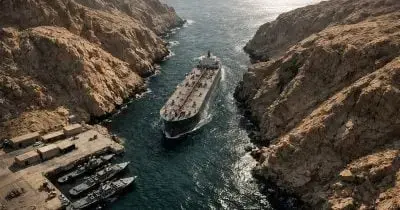
A New Era of Crypto-Tolls?
The Strait of Hormuz, a critical waterway for global oil trade, now requires commercial vessels to coordinate with Iran's naval forces before passage. This move by Iran's Islamic Revolutionary Guard Corps Navy affects a significant portion of the world's oil supply. The strait handles around a fifth of global oil traffic.
Breaking news
 Bitcoin Drops Below $82,000 After Hot US Inflation Data
 Kraken Parent Payward Acquires Saldo Bank for European Expansion
 UK Trader Sues BitMEX Over 1,053 Losing Trades in £20 Million Claim
 EU Banking Regulator Seizes Direct Control of USDC Oversight
The new policy involves Iranian naval approval for vessels to pass through the strait, which separates Iran from the Arab states. Details of the coordination process are still emerging, but it is clear that Iran is tightening its grip on this vital shipping lane. The move is seen as a significant escalation in Iran's maritime policies.
Iran is reportedly considering a cryptocurrency-based toll system for vessels passing through the strait. This would be a novel approach to maritime tolls, leveraging the security and transparency of blockchain technology. The use of cryptocurrency could potentially simplify transactions and reduce the risk of disputes.
Can Global Oil Trade Adapt?
The imposition of Iranian naval approval and potential crypto-tolls raises questions about the future of global oil trade. Shipping companies and oil producers will need to adapt to these new requirements, potentially leading to increased costs and complexity. The impact on global oil prices remains to be seen.
The Strait of Hormuz is a critical chokepoint, and Iran's new policies will likely have far-reaching consequences for the global energy market. As the situation develops, it is clear that Iran is asserting its control over this vital waterway.
Frequently Asked Questions
What is the new requirement for commercial vessels in the Strait of Hormuz? Commercial vessels must now coordinate with Iran's naval forces before passing through the strait. This involves obtaining approval from the Iranian authorities.
How will the cryptocurrency-based toll system work? The details of the crypto-toll system are still unclear, but it is expected to leverage blockchain technology for secure and transparent transactions.
What are the potential consequences of Iran's new maritime policies? The new policies could lead to increased costs and complexity for shipping companies and oil producers, potentially impacting global oil prices.