The specific purpose of this provision is
Drastic measure imposed by FinCEN: MEXC Global isolated from the US banking system due to suspicious flows of $16 billion
Breaking news
 Injective Seeks SEC Approval for Onchain Trading of Tokenized Stocks
 Bitcoin Hits $61,000 as Short Sellers Face $117 Million in Liquidations
 Bitcoin’s Dormant Supply Hits 68.5% as Price Stalls Near $60,000
 Bitcoin ETFs Bleed $3.05B in Seven Days as November Outflows Hit $5.39B
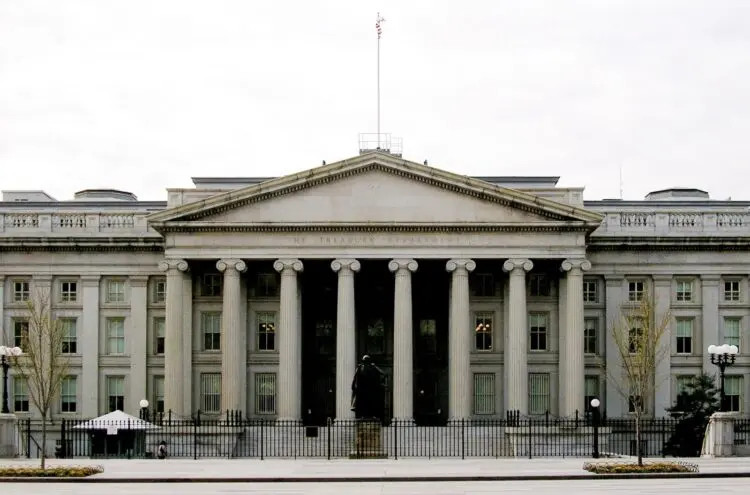
In the context of the intensification of financial regulation at national level, the US Treasury Department, through the Financial Crimes Enforcement Network (FinCEN), has adopted an exceptionally serious decision. This action targets the crypto trading platform MEXC Global, severely restricting its access to US banking institutions. The basis for this restriction is based on the Agency's findings that MEXC Global facilitated at least US$16 billion in illegal activities.
This official notification of FinCEN, issued on 6 November, sets out a special measure prohibiting US banks from processing any transfer that includes MEXC Global. It is crucial to note that this finding is a formal indictment by the regulator, not a legal ruling applied to each user of the MEXC platform. The nature of this information constitutes the most notable topic of law enforcement in the last weekend in the crypto space, news that comes from the US Treasury rather than from the analysis of trading charts.
The specific purpose of this provision is to block access to the US banking infrastructure, in particular to the dollar payment channels and financial intermediaries that would facilitate the settlement of transactions related to this exchange. It is therefore not appropriate to assume that all blockchain transactions associated with addresses within the platform have been technically discontinued as public blockchain networks operate separately from regulated banking systems. In addition, the sum of $16 billion does not represent losses of clients or missing assets; it is a characterization of transactions identified by FinCEN as related to illegal activities.
This event falls within the broader operation called ' Operation Economic Outcast , a US Treasury initiative focused on dismantling networks that evade economic sanctions. The implications for compliance teams are immediate and severe: even a payment that indirectly touches a restricted party can expose the entity, even if the end customer does not intend to interact with an entity under penalty.
However, the mechanism applied by FinCEN differs
Crypto exchanges do not rely solely on match engines and on-chain portfolios; they rely on a complex partner ecosystem. Payment companies, correspondent banks, custodians and stablecoin issuers are all involved in the movement of client funds. When U. S. institutions are prohibited from processing transfers related to a specific exchange, those providers are required to rigorously review screening procedures and contractual agreements. Experience in times of market stress has demonstrated the vitality of this financial infrastructure. For example, in our analysis of the restrictions applied to transactions with European stablecoins, a change in the regulatory framework altered the practical routes of access to certain assets for users.
However, the mechanism applied by FinCEN differs from how a simple token restriction could be interpreted. The distinction between holding a token and accessing a specific service remains relevant. Although there may be side effects on liquidity and settlement, these effects require concrete evidence, not just speculation. The provision itself does not provide data on the volume of MEXCs dependent on US banks or on the speed at which compliant alternatives could be implemented.
In terms of communication to users and partners, it is essential to avoid relying on unsolicited messages that promise to unblock accounts; these tactics exploit the confusion created by regulatory actions. Customers should follow direct notifications from the MEXC platform and their own banking institutions. While institutional companies should consult the official text of the order and legal advice, not just general announcements.
Questions that remain open include exactly how the ban will be implemented, what the actual conditions for partners mean and whether MEXC Global will provide a substantial answer. At this time, the verified information is a significant banking restriction imposed by the USA, based on official findings from FinCEN, and not evidence that clients' crypto balances have disappeared.
