Stablecoin Risks at the Forefront
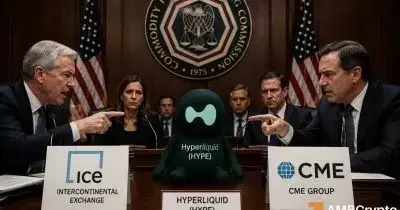
CME Group and NYSE are pressuring US regulators to take action against Hyperliquid, a rapidly growing decentralized derivatives platform. This move comes as Hyperliquid's popularity surges, posing a potential threat to traditional exchanges. The platform's on-chain derivatives trading has gained significant traction.
Breaking news
 Bitcoin Drops Below $82,000 After Hot US Inflation Data
 Kraken Parent Payward Acquires Saldo Bank for European Expansion
 UK Trader Sues BitMEX Over 1,053 Losing Trades in £20 Million Claim
 EU Banking Regulator Seizes Direct Control of USDC Oversight
The lobbying effort is driven by concerns over the risks associated with Hyperliquid's reliance on Circle's USDC stablecoin. Critics argue that this dependence creates vulnerabilities in the decentralized platform. CME Group and Intercontinental Exchange, NYSE's parent company, are urging the Commodity Futures Trading Commission (CFTC) to scrutinize Hyperliquid's operations.
Hyperliquid's heavy reliance on USDC raises concerns about the potential consequences of a stablecoin collapse. If USDC were to lose its peg or face regulatory issues, Hyperliquid's liquidity could be severely impacted. This vulnerability is at the heart of the lobbying effort against the decentralized platform.
Can Decentralized Platforms Weather Regulatory Storms?
The CFTC is being asked to consider the risks associated with Hyperliquid's business model. Regulators are weighing the potential consequences of allowing a decentralized platform to operate with what some see as inadequate safeguards.
As regulatory pressure mounts, the fate of Hyperliquid hangs in the balance. A crackdown on the platform could have far-reaching implications for the decentralized derivatives market. The outcome will depend on the CFTC's assessment of the risks and benefits associated with Hyperliquid's operations.
Tighter regulations on Hyperliquid could reshape the decentralized derivatives landscape, potentially driving trading activity back to traditional exchanges. The outcome will have significant implications for the future of decentralized finance.
Frequently Asked Questions
What is Hyperliquid? Hyperliquid is a decentralized derivatives platform that has gained significant traction in recent years. It allows users to trade derivatives on-chain.
Why are CME and NYSE lobbying against Hyperliquid? The two exchanges are concerned about the risks associated with Hyperliquid's reliance on USDC and its potential impact on traditional markets.
What are the potential consequences of a regulatory crackdown? A crackdown on Hyperliquid could reshape the decentralized derivatives market and potentially drive trading activity back to traditional exchanges.