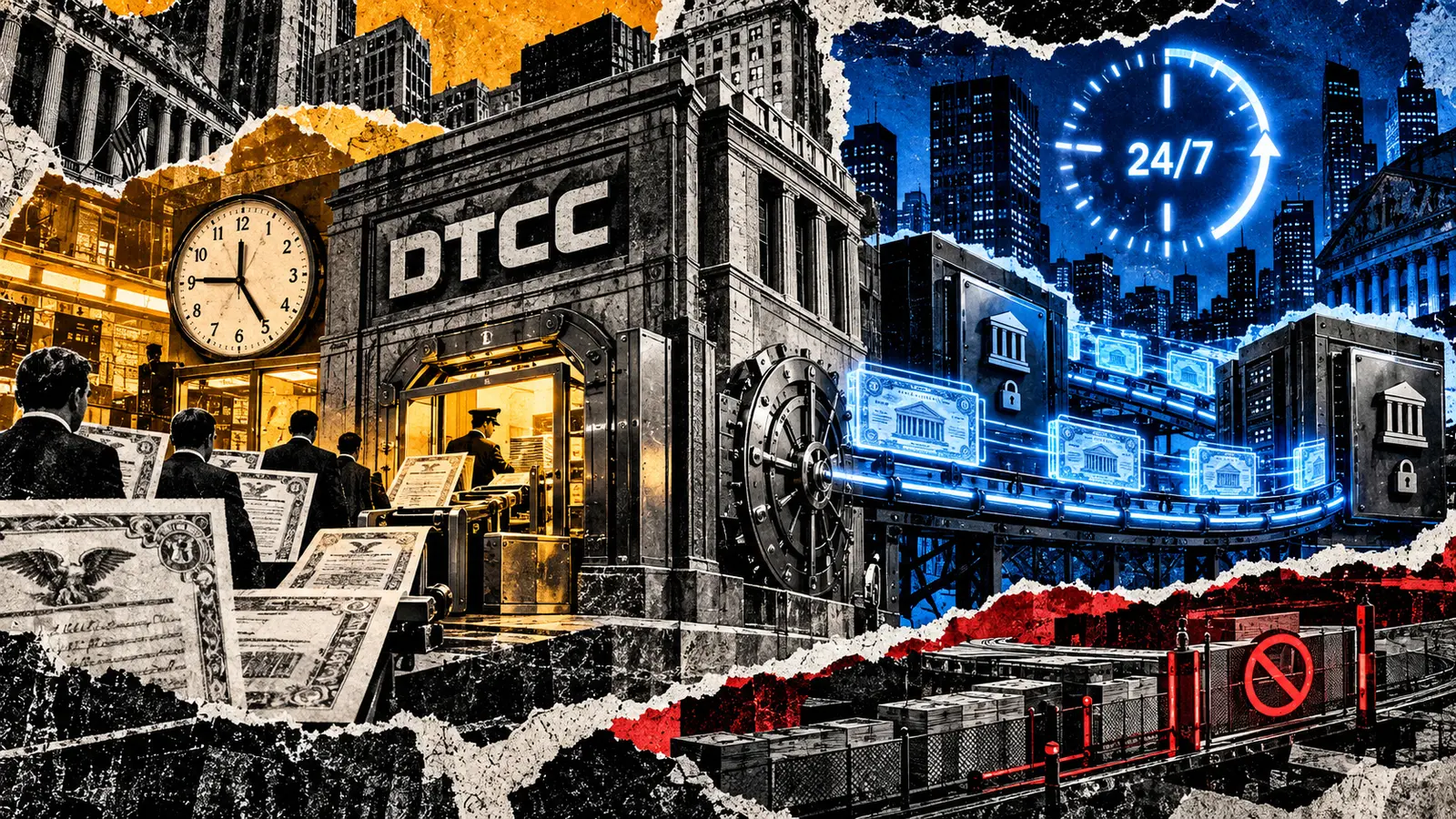
How the Token Service Works and Why It Matters
The Depository Trust & Clearing Corporation (DTCC) rolled out its token service on October 28, allowing tokenized securities to move freely between registered wallets on the same blockchain throughout the weekend. Twenty financial institutions have signed up, but the service currently supports only 34 distinct securities for continuous, non‑business‑day transfers.
Breaking news
 Injective Seeks SEC Approval for Onchain Trading of Tokenized Stocks
 Bitcoin Hits $61,000 as Short Sellers Face $117 Million in Liquidations
 Bitcoin’s Dormant Supply Hits 68.5% as Price Stalls Near $60,000
 Bitcoin ETFs Bleed $3.05B in Seven Days as November Outflows Hit $5.39B
The launch marks a milestone for the nascent market of digital assets in traditional finance. By enabling token movement outside regular trading hours, DTCC aims to reduce settlement friction and improve liquidity for participants. However, firms must still prepare inventory during business days to meet weekend demand, as conversion orders—turning physical certificates into digital tokens—are only processed on weekdays. The token transfers do not automatically confer collateral status or trigger cash payments, meaning they serve purely as a mechanism for ownership change rather than a settlement of obligations.
DTCC’s platform links registered wallets on a shared blockchain, creating a secure ledger where tokenized securities can be transferred instantly. Participants submit conversion requests during normal business hours; DTCC then mints or burns tokens to reflect the underlying asset’s status. Once tokens are in the system, they can be moved between wallets at any time, including weekends, without further verification from the clearinghouse. This continuous flow is intended to streamline post‑trade processes, cut down on settlement risk, and align the U. S. market with global trends toward digital asset infrastructure.
Will Weekend Token Transfers Change Settlement Practices?
Industry insiders note that the limited list of 34 eligible securities—primarily large‑cap equities and a handful of bonds—reflects a cautious rollout. „We are testing the technology with a manageable set of instruments before expanding,” said a DTCC spokesperson. The approach allows the firm to monitor operational resilience, address regulatory concerns, and gather feedback from early adopters. As more institutions join, the expectation is that the token catalog will broaden, eventually encompassing a wider array of asset classes.
The ability to move tokens over the weekend raises questions about the future of settlement cycles. Traditional securities settlement in the U. S. follows a T+2 timeline, meaning transactions settle two business days after trade execution. With token transfers occurring instantly, market participants could theoretically settle trades faster, but the current framework still requires cash and securities to be exchanged during business days. Consequently, while token movement speeds up the ownership record, it does not yet replace the need for cash settlement or collateral verification.
Analysts predict that as the token service matures, firms may develop complementary processes—such as automated cash‑to‑token conversion—to fully realize real‑time settlement. Until then, the weekend token capability serves as a proof of concept, demonstrating that blockchain‑based ownership records can function alongside existing clearing and settlement systems.
The rollout signals a gradual shift toward digital infrastructure in capital markets. If DTCC can expand the eligible securities list and streamline conversion workflows, the industry could see reduced settlement costs, lower counterparty risk, and greater flexibility for investors. However, regulatory clarity and robust risk controls will remain essential as the ecosystem evolves.
Frequently Asked Questions
What types of securities are currently eligible for weekend token transfers? Only 34 securities, mainly large‑cap stocks and a few bonds, have been approved for continuous token movement under DTCC’s service.
Can token transfers be used as collateral or for cash settlement? No. Token movement records ownership changes but does not automatically create collateral rights or trigger cash payments.
How do firms prepare for weekend token transfers? They must submit conversion orders during business days, allowing DTCC to mint or burn tokens ahead of the weekend, ensuring the necessary inventory is available.