How Reserve Transparency Exposed the Shortfall
Binance’s internal reserve data confirms that the recent security breach targeted specific hot wallets. These digital storage units were explicitly designated to back customer asset balances. The incident occurred on Thursday, exposing a critical vulnerability in the exchange’s infrastructure.
Breaking news
 North Korea denies FBI link to record $6 billion Binance hack
 Strategy’s deployable cash drops 45% as buybacks outpace Bitcoin purchases
 WalletConnect Adds Stellar Payments as Bermuda Ticketing Rollout Targets 2027
 Strategy Acquires $66M in Bitcoin During Recent Price Pullback
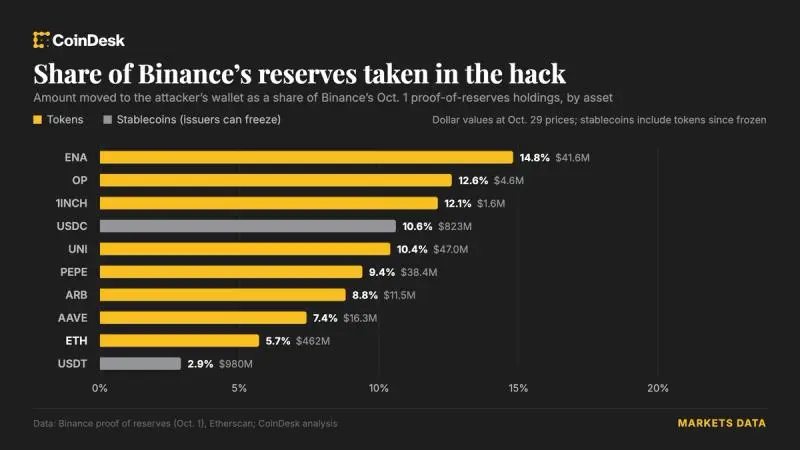
The exchange’s own transparency reports identify the compromised addresses. They are listed as holding funds meant to support user ether balances. Consequently, the exchange’s ether backing is now estimated to be six percent short. This deficit persists until Binance fully replaces the stolen assets. The data highlights a direct link between the hack and customer holdings.
Binance maintains public reserve pages to demonstrate solvency. These pages list specific wallet addresses that hold customer funds. The hacked wallet, identified as Binance 14, appears in this registry. It was active in the October 1 data set. This inclusion proves the stolen funds were part of the customer asset pool.
The discovery undermines the typical narrative that hacks only affect exchange-operated cold storage. Instead, the breach hit a hot wallet. Hot wallets are connected to the internet for fast transaction processing. This makes them more susceptible to cyberattacks than offline cold storage. The reserve data serves as an independent verification of the loss.
Can Binance Restore Full Asset Backing?
The six percent shortfall in ether backing is a significant metric. It indicates that the stolen amount was substantial relative to total holdings. Binance must now replenish these reserves to maintain its 1:1 backing ratio. Failure to do so would signal liquidity issues to the market. The exchange relies on this transparency to maintain user trust.
The immediate challenge for Binance is replacing the stolen ether. The exchange has not yet announced the full value of the loss. However, the six percent figure provides a clear benchmark. Analysts are monitoring the exchange’s treasury movements for signs of replenishment.
Customer confidence depends on the speed of this restoration. If the shortfall remains, users may withdraw funds. This could trigger a liquidity crisis. Binance has historically handled security incidents by absorbing losses. It typically compensates affected users directly from its operational reserves.
Frequently Asked Questions
The incident raises questions about hot wallet security protocols. Critics argue that keeping large customer balances in hot wallets is risky. Proponents note that hot wallets are necessary for daily trading operations. A balance must be struck between security and usability.
Which specific wallet was compromised in the hack? The compromised address is identified as Binance 14. This hot wallet was listed in the exchange’s reserve data. It was actively backing customer ether balances at the time of the breach.
How much of the ether reserve is currently missing? The reserve data shows a six percent shortfall. This gap exists because the stolen assets have not yet been replaced. The exchange must replenish these funds to restore full backing.
Does this hack affect all customer assets or just ether? The specific data provided highlights a shortfall in ether backing. The report does not confirm losses in other cryptocurrencies. However, the breach of a hot wallet could implicate other assets held in similar structures.