
Rising Rewards Fail to Stem Capital Outflows
Aave’s Ethereum V3 Umbrella pools for USDC and USDT saw a combined drop of $12.43 million between September 17 and October 17. The decline represents a 9.7 % fall in the tracked stakes, while the implied annualized reward run rate rose to roughly $1.994 million at each observation point, separate from actual spending.
Breaking news
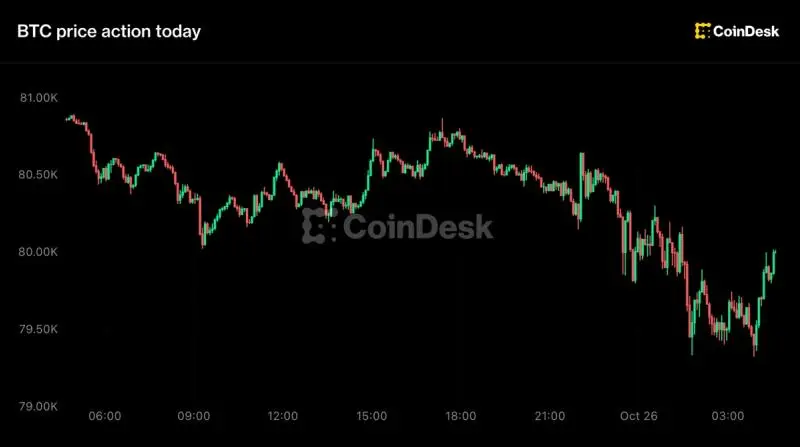 Bitcoin drops below $80,000 as traders de-risk ahead of Fed meeting
 PancakeSwap Sets Hard Deadline for opBNB CAKE Holders to Bridge Out
 BloomTrading Bot Users Lose $1M in Wallet Drain
 CoinDCX Absorbs $16 Million Loss After Internal Wallet Failure
The shrinkage reflects investors pulling capital from the two Umbrella pools, which are designed to cover deficits in their respective stablecoins and the broader Aave network. Higher reward rates, calculated from the remaining capital, suggest that the protocol is trying to retain liquidity by offering more attractive yields. However, the net outflow indicates that the incentive boost has not been enough to offset the withdrawals.
Aave’s V3 Umbrella contracts act as safety nets for USDC and USDT, stepping in when the assets face shortfalls. Between the two snapshots, the total value locked fell from $128.6 million to $116.2 million. Despite the drop, the protocol’s on‑chain data shows the implied annualized reward rate climbing from $1.80 million to $2.19 million, a 21 % increase. Analysts attribute the higher rates to Aave’s algorithmic adjustment, which raises incentives when pool balances dip. Yet the data suggests that participants are still withdrawing faster than the added rewards can attract new deposits.
Why Are Investors Pulling Out?
Market volatility and tighter liquidity across DeFi platforms have prompted many users to reallocate assets to lower‑risk options. The broader crypto market experienced a 15 % dip in major token prices during the same period, pressuring stablecoin demand. Moreover, competing protocols have introduced alternative yield products with lower risk profiles, drawing capital away from Aave’s backstops. The combination of external market stress and internal incentive adjustments explains the net outflow despite higher promised returns.
The contraction of the Umbrella pools could expose Aave’s stablecoin users to higher risk if a sudden deficit occurs. While the protocol’s dynamic reward mechanism aims to replenish liquidity, the lag between incentive changes and capital inflows may leave gaps. Aave’s developers have signaled plans to fine‑tune the reward formulas and explore additional collateral options to bolster resilience.
Frequently Asked Questions
What are Aave’s Umbrella pools? They are reserve contracts that provide emergency liquidity for USDC and USDT on the Aave platform, covering shortfalls and maintaining stability.
How are reward rates determined? The protocol adjusts annualized rewards based on the current pool balance; lower balances trigger higher rates to attract deposits.
Will the recent outflows affect Aave users? Potentially, as reduced backstop capital could limit the protocol’s ability to absorb shocks, though Aave is working on measures to mitigate this risk.