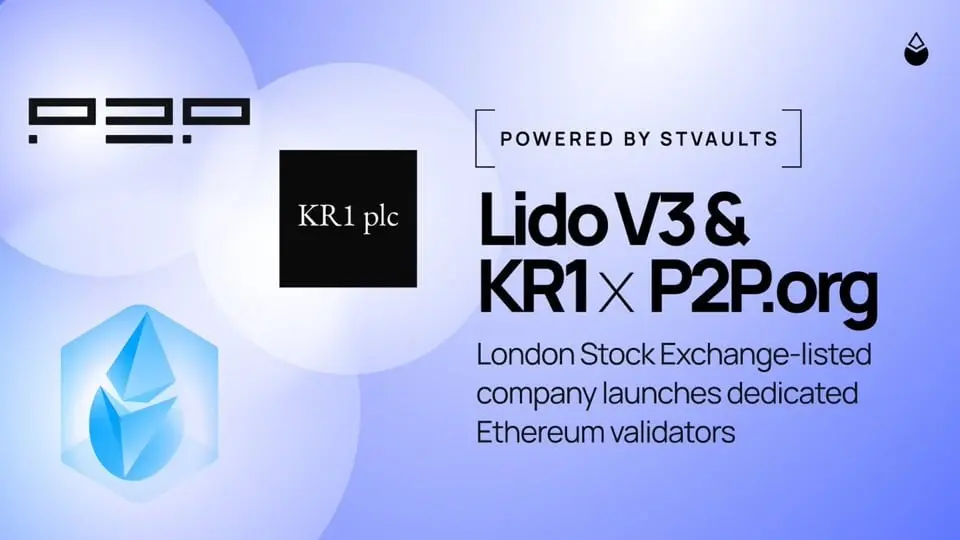
Staking Rewards and Infrastructure Income Target
London-based digital asset investment firm KR1 has activated its first 10 dedicated Ethereum validators, marking the beginning of a major staking initiative. The launch on 15 October 2026 kicks off plans to stake the majority of its 6,200 ETH treasury, aiming to generate staking rewards and infrastructure income.
Breaking news
 Injective Seeks SEC Approval for Onchain Trading of Tokenized Stocks
 Bitcoin Hits $61,000 as Short Sellers Face $117 Million in Liquidations
 Bitcoin’s Dormant Supply Hits 68.5% as Price Stalls Near $60,000
 Bitcoin ETFs Bleed $3.05B in Seven Days as November Outflows Hit $5.39B
The company, listed on the London Stock Exchange, says the initial validator deployment is part of a broader strategy to put its Ethereum holdings to productive use. KR1 expects the setup to deliver clear attribution of staking rewards while building infrastructure income streams. The 10 validators represent the first phase of a planned 100-plus validator network.
KR1's move aligns with growing institutional interest in Ethereum staking following the network's transition to proof-of-stake. The firm aims to capitalise on staking yields while maintaining operational control over its validator infrastructure. By deploying dedicated validators rather than relying on third-party services, KR1 seeks to maximise reward capture and minimise counterparty risk.
How Will This Affect KR1's Financial Outlook?
The company has indicated that the initial 10 validators will be expanded to over 100 in the coming months. This scale-up will enable KR1 to stake most of its 6,200 ETH holdings, positioning the firm as a significant participant in Ethereum's staking ecosystem.
The staking initiative is expected to provide a steady stream of ETH-denominated rewards, contributing to the company's overall investment returns. KR1 has previously highlighted staking as a key component of its treasury management strategy, particularly as institutional adoption of crypto assets continues to mature.
Market observers note that large-scale staking deployments by publicly listed firms could signal renewed confidence in Ethereum's long-term prospects. KR1's approach also reflects a broader trend among digital asset firms to generate yield from idle holdings through protocol-level participation.
Looking ahead, KR1 plans to monitor validator performance closely while scaling operations. The company may also explore additional staking opportunities across other proof-of-stake networks, though Ethereum remains its primary focus for now.
Frequently Asked Questions
How many validators has KR1 launched? KR1 has deployed 10 dedicated Ethereum validators as of 15 October 2026, with plans to expand to over 100 validators.
What portion of KR1's ETH is being staked? The company intends to stake most of its 6,200 ETH treasury, with the initial 10 validators representing the first phase of this rollout.
What are the expected benefits of KR1's staking strategy? The initiative aims to generate staking rewards and infrastructure income while maintaining clear attribution of returns and reducing reliance on third-party staking providers.