
Why spending matters more than hoarding
Jack Dorsey, CEO of The Block, argues that Bitcoin only succeeds if people actually spend it. His stance reopens the long-running debate between Bitcoin as a store of value and Bitcoin as a medium of exchange.
Breaking news
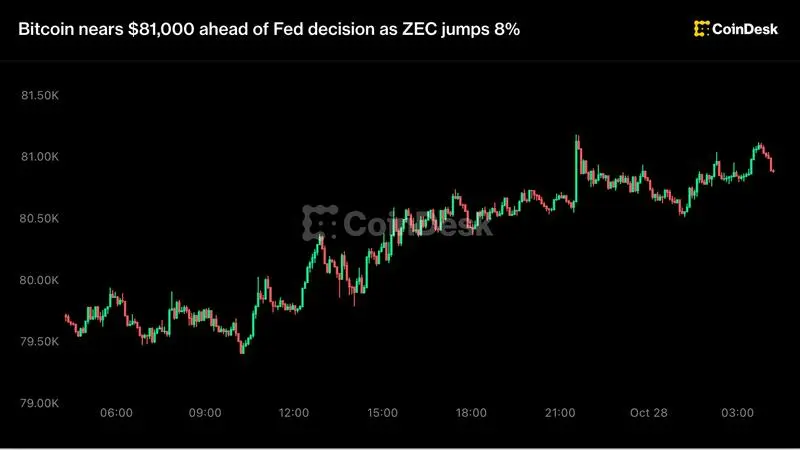 Bitcoin Approaches $81,000 as Fed Decision Looms
 Solflare Validator Halts Rewards After Security Breach, Users’ Funds Remain Protected
 Solana Wallet Staking Incident Disrupts Validator Rewards
 Hong Kong Launches Round-the-Clock Trading for Tokenized Fund Shares
Dorsey believes that if Bitcoin ends up serving only as digital gold, rather than money people use for transactions, that outcome counts as failure. He sees adoption in everyday commerce as the true test of the cryptocurrency's viability.
The core of Dorsey's argument is that a currency that nobody spends has failed its primary purpose. Bitcoin was designed to move value between parties without intermediaries. If it merely sits in wallets as a speculative asset, it functions like a commodity, not a currency.
Can Bitcoin become everyday money?
Critics of this view point out that Bitcoin's limited transaction speed and high fees have historically pushed users toward holding rather than spending. Dorsey's position forces the community to address these technical barriers if they want Bitcoin to function as real money.
For Bitcoin to serve as a widely used transaction medium, several hurdles need clearing. Transaction confirmation times and network congestion remain significant obstacles. Scalability solutions and layer-two protocols aim to fix these issues, but widespread merchant adoption still lags.
Dorsey's warning lands at a moment when institutional investors dominate Bitcoin holdings. The shift from retail spenders to institutional treasuries reinforces the digital gold narrative he is challenging.
Frequently Asked Questions
Is Bitcoin currently used for everyday transactions? Not widely. Most Bitcoin holders treat it as a long-term investment. Merchant acceptance remains limited, and high fees discourage small purchases.
What would make Bitcoin a true currency? Lower transaction costs, faster confirmations, and broad merchant adoption. Without spending, it functions as a store of value only.
Does Dorsey's view conflict with Bitcoin's original design? Bitcoin's white paper explicitly frames it as peer-to-peer electronic cash. Dorsey's stance aligns with that original intent, pushing back against the modern digital goldframing.