Traders interpreted the data as a sign that inflation may persist, keeping
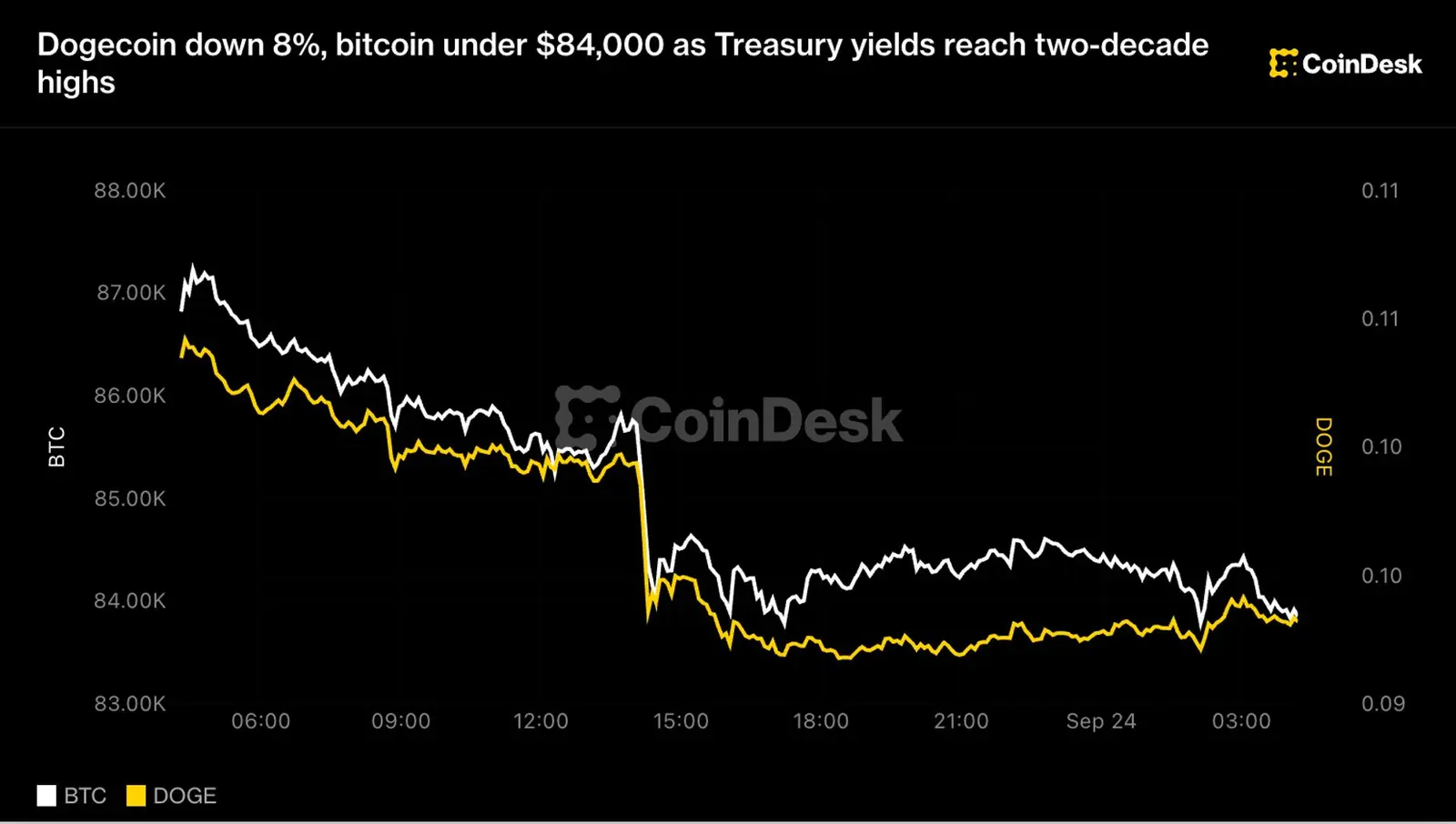
Dogecoin fell 8% and bitcoin dropped below $84,000 on Thursday as U. S. Treasury yields climbed to their highest level since 2007, driven by stronger-than-expected economic data and a weak government bond auction. The broader cryptocurrency market felt pressure as traditional markets reacted to shifting monetary policy expectations. The selloff in digital assets coincided with a rebound in oil prices, the strongest U. S. business activity reading in five years, and a poorly received sale of five-year Treasury notes. These factors combined to push borrowing costs higher, reducing appetite for riskier assets like cryptocurrencies. Dogecoin, often more volatile than larger tokens, led the decline among major digital currencies. How Economic Data Is Reshaping Crypto Market Dynamics Strong indicators from the services and manufacturing sectors suggest the U. S. economy remains resilient, potentially delaying any Federal Reserve interest rate cuts.
Breaking news
 Investment Activity Surges in Global Cryptocurrency Markets
 Bitcoin Faces Resistance Near Record Highs as Crypto Infrastructure Recovers
 Wall Street Giant Predicts Bitcoin Surge as New Crypto Funds Enter the Market
 Sleeping Ethereum Giants Stir After Years of Silence
Traders interpreted the data as a sign that inflation may persist, keeping Treasury yields elevated. Higher yields increase the opportunity cost of holding non-yielding assets like bitcoin and dogecoin. The five-year Treasury auction saw weak demand, with investors requiring higher yields to purchase the debt. This lack of enthusiasm signaled concerns about fiscal sustainability and added upward pressure on yields across the curve. As a result, risk assets across markets faced headwinds, with crypto particularly sensitive to shifts in liquidity and risk sentiment. What Role Does Investor Sentiment Play in Token Volatility? Dogecoin’s sharp drop highlights its sensitivity to macroeconomic shifts compared to more established cryptocurrencies. While bitcoin also declined, its larger market cap and institutional adoption provide some buffer against short-term swings. Dogecoin, often driven by social media trends and retail speculation, tends to amplify moves in either direction during periods of uncertainty.
Analysts note that when traditional markets show strength
Analysts note that when traditional markets show strength, crypto often struggles unless there is a clear catalyst within the digital asset space. Without such drivers, tokens like dogecoin are more likely to follow traditional risk-off patterns. This dynamic was evident as equities also faced pressure amid the yield surge. Frequently Asked Questions Why did Treasury yields rise sharply? Yields increased due to strong U. S. business survey data, rising oil prices, and weak demand in a five-year Treasury note auction, all signaling stronger economic activity and persistent inflation concerns. Is dogecoin more volatile than bitcoin? Yes, dogecoin typically exhibits higher price volatility than bitcoin due to its smaller market cap, heavier reliance on retail trading, and greater influence from social media and speculative trends. Could crypto recover if yields stabilize?
Potentially, if Treasury yields plateau or decline and risk appetite returns, cryptocurrencies may regain support, especially if accompanied by positive developments within the blockchain or digital asset sectors.