Leveraged Longs Fuel the Bloodbath
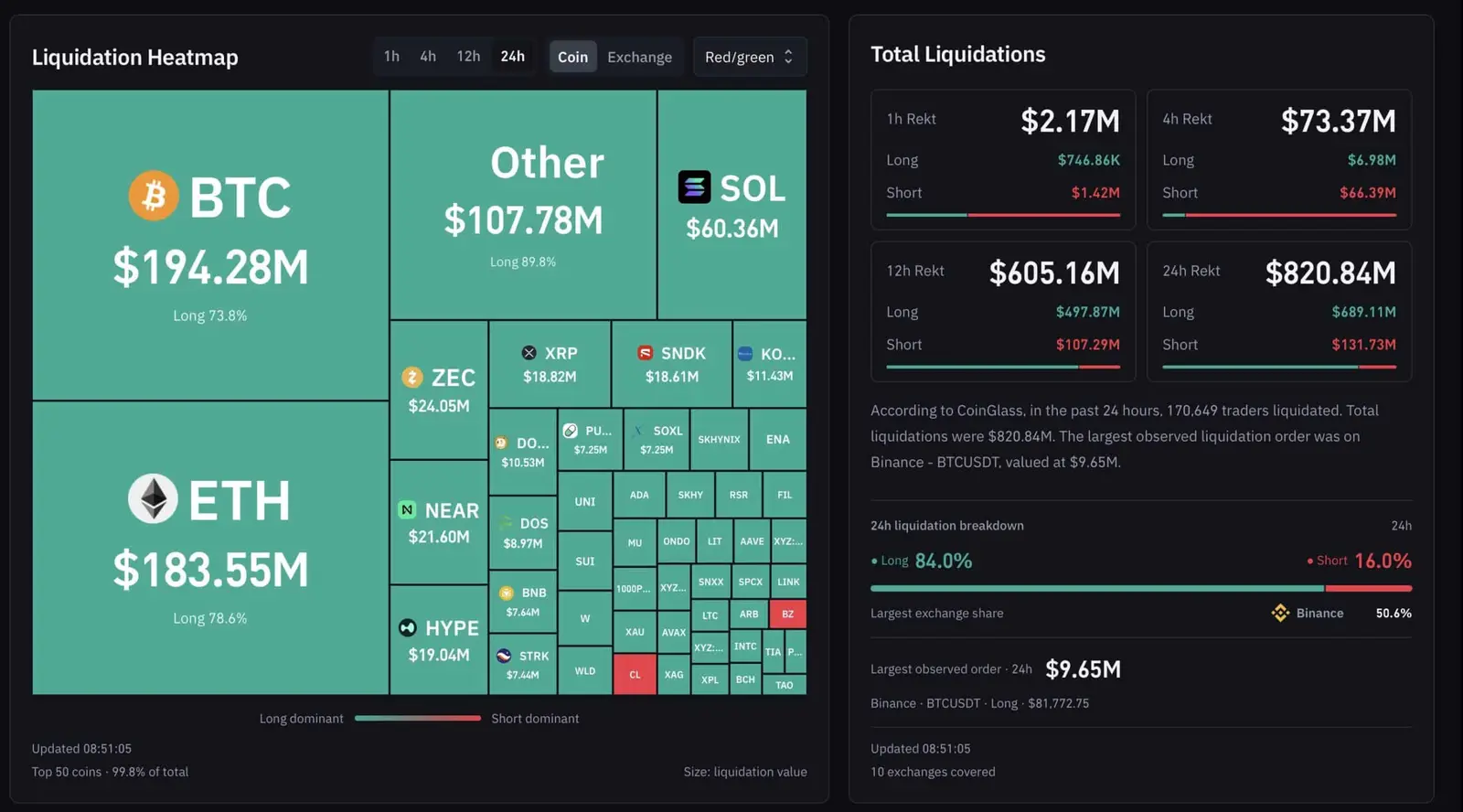
On Monday, October 12, Bitcoin’s price slipped to roughly $81,000, triggering a torrent of forced liquidations that totaled $820.84 million. The drop came after a surge in leveraged long positions, which were forced to close as the market slid. By the end of the day, the cryptocurrency had rebounded to $83,635, but the episode highlighted the fragility of the market under macro‑economic pressure.
Breaking news
 Bitcoin Drops Below $82,000 After Hot US Inflation Data
 Kraken Parent Payward Acquires Saldo Bank for European Expansion
 UK Trader Sues BitMEX Over 1,053 Losing Trades in £20 Million Claim
 EU Banking Regulator Seizes Direct Control of USDC Oversight
The liquidation spike was driven largely by traders who had bet on a bullish trend. When Bitcoin fell past key support levels, margin calls accelerated, causing a cascade of sell‑offs. CoinGlass data shows that the majority of the $488.61 million in liquidated positions were long, underscoring a heavy concentration of bullish bets. The rapid unwinding of these positions added pressure to an already volatile market, prompting a brief but sharp dip before the price recovered.
The bulk of the liquidations came from long positions that had been amplified through derivatives and margin trading. As Bitcoin’s price approached the $80,000 mark, margin thresholds were breached, and exchanges executed automatic liquidations to protect themselves. This created a feedback loop: the forced selling pushed the price lower, triggering more liquidations. The resulting $820 million in forced exits is one of the largest single‑day liquidation events in Bitcoin’s history, reflecting the high degree of leverage that has accumulated in the market.
Will CPI Data Reinforce the Bullish Trend?
Exchanges reported that the average liquidation price hovered around $79,500, indicating that many traders had entered positions with insufficient buffer against volatility. Analysts suggest that the concentration of long positions may have been a response to recent bullish technical patterns, but the lack of protective stops left the market exposed. The rapid reversal to $83,635 by the end of the day shows that the underlying bullish sentiment remained, but the episode exposed the vulnerability of leveraged traders to sudden market swings.
With the U. S. Consumer Price Index set to release later this week, market participants are watching closely for signals that could either validate or undermine the current bullish narrative. Inflation data could influence U. S. Federal Reserve policy, which in turn affects risk appetite across assets, including Bitcoin. If CPI shows higher inflation, the Fed may raise rates, potentially dampening growth‑oriented assets and tightening liquidity. Conversely, a lower CPI reading could keep rates steady, supporting the bullish case for Bitcoin.
Technical analysts point to several key levels that could dictate the next move. Support at $82,000 appears critical; a break below could trigger further selling, while a bounce might confirm the rally. Resistance near $85,000 is equally significant; if Bitcoin can breach this zone, it would signal a strong continuation of the uptrend. The recent recovery to $83,635 suggests resilience, but the market remains sensitive to macro data releases.
Outlook: Volatility and Opportunity
The upcoming CPI report is therefore a pivotal event. Traders will likely adjust positions, potentially adding leverage or tightening stops. The outcome could either reinforce the bullish bias or trigger a new wave of liquidations if the market moves against expectations.
The $820 million liquidation event has underscored the high leverage present in the Bitcoin market. While the price has rebounded, the episode serves as a cautionary tale for traders who rely heavily on borrowed capital. Investors should consider tighter risk management practices, such as diversified exposure and protective stops, to mitigate the impact of sudden market swings.
In the broader context, Bitcoin’s resilience in the face of a massive liquidation event suggests that the underlying demand remains strong. However, the looming CPI data introduces uncertainty. If inflation remains high, the Federal Reserve may tighten monetary policy, potentially curbing risk‑seeking behaviour and weighing on Bitcoin’s price. Conversely, a lower CPI could keep rates stable, supporting the bullish case.
Ultimately, the market will be tested by the CPI release. Traders and investors must stay vigilant, monitor key support and resistance levels, and adjust strategies to navigate the potential volatility that macro‑economic data may bring.
Frequently Asked Questions
What caused the $820 million liquidation spike? The spike was triggered by a wave of forced liquidations from leveraged long positions that were unable to meet margin calls as Bitcoin’s price fell below key support levels.
How did Bitcoin recover after the liquidation event? After the initial dip to around $81,000, Bitcoin rallied to $83,635, driven by underlying bullish sentiment and a rebound in market confidence once the most vulnerable positions were liquidated.
What impact could the upcoming CPI data have on Bitcoin? Higher CPI could prompt the Fed to raise rates, tightening liquidity and potentially weakening Bitcoin. Lower CPI may keep rates steady, supporting the bullish trend and encouraging risk‑seeking investment in Bitcoin.

