The Escalating Threat of AI Exploits
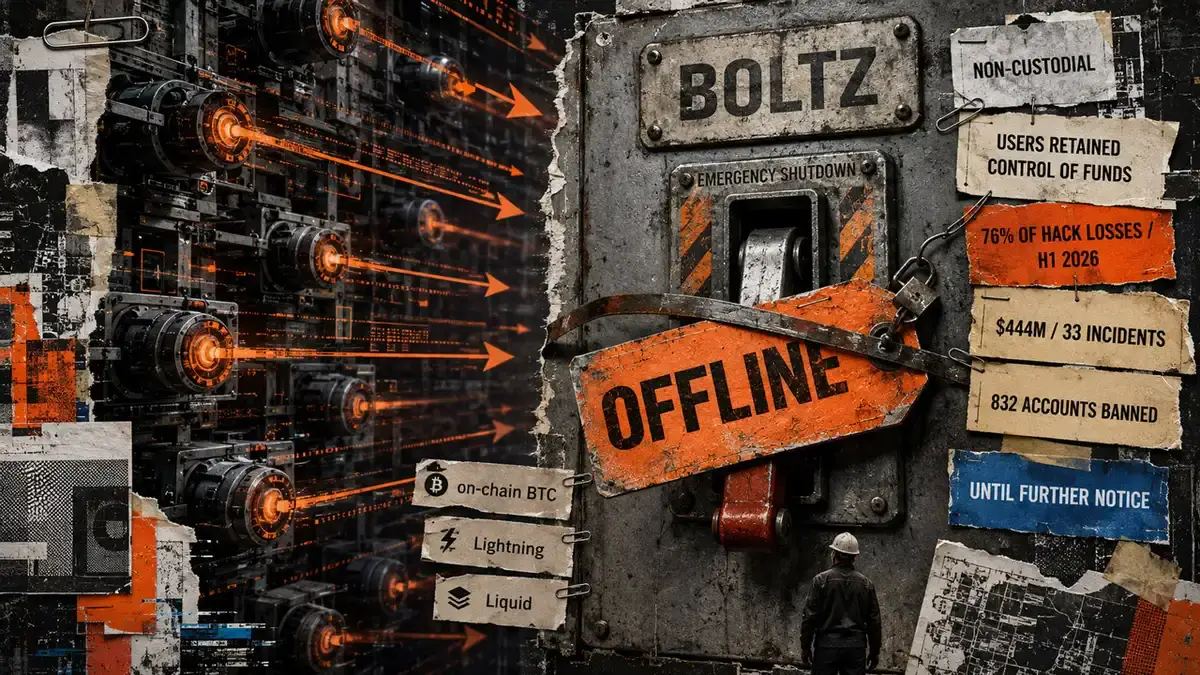
A Bitcoin exchange, Boltz, has ceased operations following a sustained campaign of automated, AI-driven attacks. The platform announced its shutdown on August 3. While no user funds were lost, the constant threat proved overwhelming for the team.
Breaking news
 Bitcoin Drops Below $82,000 After Hot US Inflation Data
 Kraken Parent Payward Acquires Saldo Bank for European Expansion
 UK Trader Sues BitMEX Over 1,053 Losing Trades in £20 Million Claim
 EU Banking Regulator Seizes Direct Control of USDC Oversight
Boltz, designed as a non-custodial service, successfully protected all user assets. This design meant the company never held customer funds directly. Despite this security, the sheer volume and intensity of the attacks forced the closure.
Initially, the AI-assisted probing led to several contained breaches. These early attempts were successfully mitigated by the Boltz team. However, the attacks quickly intensified, becoming more sophisticated and frequent.
Does AI Hacking Threaten Decentralization?
The company stated its team could no longer keep up with the accelerating pace of these malicious activities. This constant battle against advanced automated threats became unsustainable. Consequently, all swap services on Boltz have been permanently halted.
The closure of Boltz highlights a growing concern within the cryptocurrency space. The rise of AI-powered hacking tools could push users back towards centralized custodians. These larger entities often have more resources to combat such sophisticated attacks.
This trend could undermine the core principles of decentralization that many cryptocurrency projects champion. The incident suggests that even well-designed, non-custodial systems face significant challenges from evolving cyber threats. The future of independent crypto services may depend on developing equally advanced defensive measures.
Frequently Asked Questions
What caused Boltz to shut down? Boltz shut down due to an inability to keep pace with continuous, escalating attacks from automated, AI-assisted probing. The constant threat overwhelmed the team's resources.
Were any user funds lost during the attacks? No, user funds were not lost. Boltz's non-custodial design ensured that all user assets remained safe throughout the months of attacks.
What is the broader implication of Boltz's closure for cryptocurrency? The closure suggests that advanced AI hacking could push cryptocurrency users toward larger, centralized custodians. This trend might challenge the decentralized nature of many crypto services.