Institutional Resilience Amid Price Swings
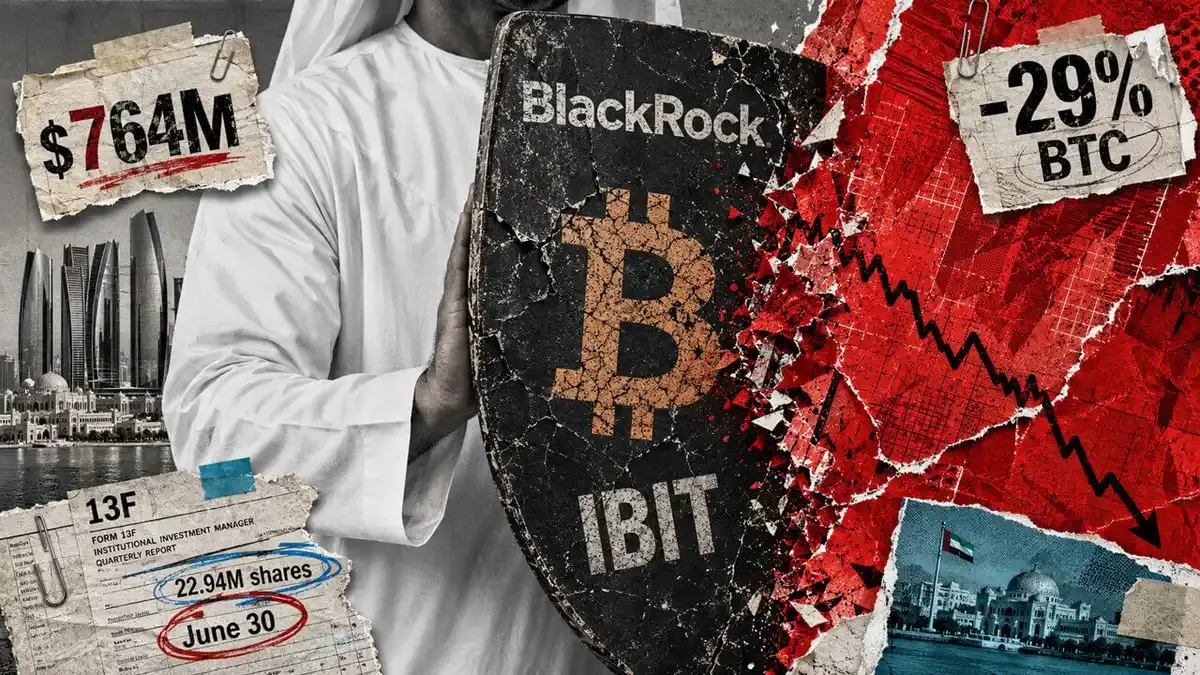
Two major sovereign wealth funds in Abu Dhabi have opted to hold their entire stakes in BlackRock’s Bitcoin exchange-traded fund despite a recent market downturn. The decision comes as the digital asset’s price decline wiped roughly $118 million in paper value from the funds' combined holdings during the recent crypto market slump.
Breaking news
 Bitcoin Drops Below $82,000 After Hot US Inflation Data
 Kraken Parent Payward Acquires Saldo Bank for European Expansion
 UK Trader Sues BitMEX Over 1,053 Losing Trades in £20 Million Claim
 EU Banking Regulator Seizes Direct Control of USDC Oversight
The funds chose not to liquidate or reduce their exposure despite the significant price drop. This move signals a long-term commitment to digital asset strategies, even when facing immediate valuation losses. The decision highlights a growing trend among institutional investors to treat Bitcoin as a strategic asset rather than a short-term trading vehicle.
The $118 million decline reflects the broader volatility currently gripping the cryptocurrency sector. Despite this drop, the Abu Dhabi entities have remained steadfast in their investment thesis. Financial analysts suggest this behavior indicates that sovereign wealth managers are prioritizing portfolio diversification over reacting to temporary market corrections.
Are Sovereign Wealth Funds Changing Crypto Strategy?
By keeping every share, these investors are effectively betting on a future recovery. Their strategy contrasts with retail traders who often panic-sell during sharp downward movements. The stability of these sovereign holdings provides a degree of legitimacy to the asset class, suggesting that professional institutional capital is becoming increasingly comfortable with Bitcoin’s inherent price swings.
The decision to hold steady suggests that these funds view Bitcoin as a core component of their long-term financial roadmap. Rather than timing the market, these investors seem focused on the potential for institutional-grade digital assets to hedge against traditional economic shifts. This approach reinforces the role of sovereign capital as a stabilizing force within the crypto ecosystem.
Looking ahead, the market will watch closely to see if other state-backed investors follow this example. If these funds continue to maintain their positions, it could signal a broader shift in how major global players integrate decentralized assets into their sovereign portfolios.
Frequently Asked Questions
What was the total value loss for the Abu Dhabi funds? The funds saw their holdings decrease in value by approximately $118 million due to the recent market downturn.
Did the sovereign funds sell any of their Bitcoin ETF shares? No, the funds maintained their full position in BlackRock’s Bitcoin ETF without selling or trimming any shares.
Why did the funds choose to hold their positions? The decision reflects a long-term strategic commitment to digital assets, prioritizing portfolio diversification over reacting to short-term market volatility.