Validator Control Windows Shrink
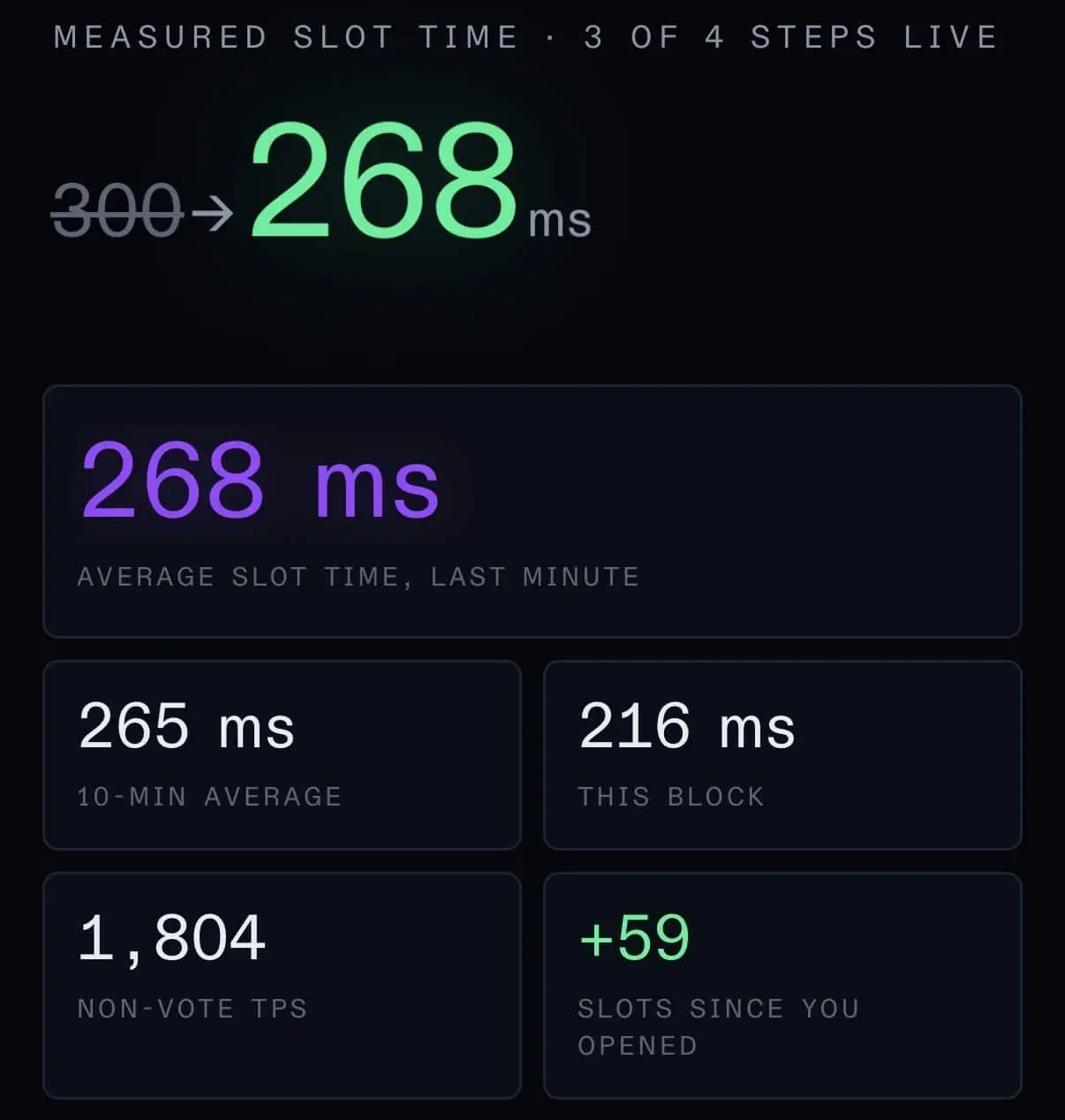
Solana has shortened its target slot time from 300 milliseconds to 250 milliseconds, effective Friday. The change increases the network’s block cadence by nearly 17%, moving from about 3.3 to 4 blocks per second. This adjustment aims to improve transaction speed and reduce latency for users and services.
Breaking news
 Investment Activity Surges in Global Cryptocurrency Markets
 Bitcoin Faces Resistance Near Record Highs as Crypto Infrastructure Recovers
 Wall Street Giant Predicts Bitcoin Surge as New Crypto Funds Enter the Market
 Sleeping Ethereum Giants Stir After Years of Silence
The slot time determines how long validators wait before proposing a new block. Tightening the window compresses the overall cycle. Solana’s move is part of its effort to enhance throughput and keep pace with high‑frequency trading demands. It also narrows the validator control window, limiting the period during which a validator can influence block ordering.
Validator control windows are the interval during which a validator can submit a block. With the new 250‑millisecond slot, this window narrows. Validators must finalize and sign blocks more quickly, reducing the chance for manipulation. The change also shortens the time for network participants to react to updates, improving overall responsiveness.
Will Faster Slots Benefit High‑Frequency Trading?
High‑frequency trading (HFT) platforms rely on low latency to capture price movements. The new cadence offers a potential edge, as each block appears 50 milliseconds sooner on average. Traders can execute orders faster, and the network can confirm transactions quicker. However, faster slots also increase the load on validators, demanding more robust hardware and software.
The adjustment is expected to lift Solana’s transaction throughput while tightening security. As block times shorten, the network must balance speed with validator reliability. Developers may need to update smart‑contract logic to accommodate the faster cadence. Overall, the change positions Solana to stay competitive in a market where milliseconds matter.
Frequently Asked Questions
How does a shorter slot time affect validator rewards? Validators receive rewards based on block production. A faster slot means more blocks per second, potentially increasing reward opportunities, but also demanding higher performance.
Will this change impact transaction fees? Shorter slots can improve throughput, which may help keep fees stable. However, increased validator load could influence fee dynamics indirectly.
Can existing d Apps adapt quickly to the new cadence? Most d Apps will need minor adjustments to handle the faster block intervals. Developers should test their contracts under the new timing to ensure compatibility.